

How to Choose Wedding Flowers That Match Your Venue
Match your flowers to the venue by reading its scale, light, and materials first, then choosing colour, shape, and varieties that belong in the room.
A ballroom with a painted coffered ceiling and a white marquee in a windy field ask for two completely different sets of flowers. Neither is better. One simply belongs, and the other looks like it arrived from somewhere else. Most couples book the venue first and think about flowers months later, which is the sensible order. It just means the flowers should follow the building rather than the other way round.
Here is how to read a venue properly, and how to translate what you find into stems, scale, and colour that feel inevitable rather than borrowed.
Read the Room Before You Choose a Single Stem
Visit the venue with flowers in mind, and visit at the hour your ceremony or dinner will actually happen. Morning light in a north-facing room is cool and blue; the same room at six in the evening can turn honey-coloured. Photographs taken at midday will not tell you much about a candlelit reception.
Walk in as a guest would. Sit where you will sit. Then make a quiet list of what is already there: ceiling height, wall colour and texture, the floor, the windows and which way they face, and any fixed decoration you cannot move, from tapestries to a chandelier to a mural. Note the shape of the tables and the colour of the linen if it is included.
Ask the coordinator two things early. First, what the venue already owns, since urns, candelabras, and arches are often available and can save you money. Second, what the rules are on fixings, open flame, hanging installations, and access times for setting up and clearing away.
Match the Scale of the Flowers to the Architecture
Scale is where most weddings go wrong, usually in the direction of too little. A low arrangement in a barn with a two-and-a-half-metre ceiling is generous and correct. The same arrangement in a ten-metre glasshouse disappears. A modest bouquet is perfect for the walk down a short garden path and looks lost at the top of a twenty-metre cathedral aisle.
Use these as working rules:
- Low ceilings: spread horizontally. Wide, low bowls, trailing greenery along the table, and nothing that blocks the view across the room.
- High ceilings: lift the eye. Tall, slim vases, branching stems, or hanging installations that occupy the empty air above the tables rather than sitting on them.
- Long aisles: repetition over size. A series of smaller pew-end or aisle-edge pieces reads better than one enormous arrangement at the front.
- Small chapels and intimate rooms: one confident focal point, usually behind or beside you, and let the rest stay quiet.
There is a simple test worth doing. Stand at the back of the room, where the last guest will sit, and look at the table where the flowers will be. If you cannot register them from there, they are too small. If they block the view of the person giving a speech, they are too big.
Colour: Borrow From the Venue's Own Palette
There are two reliable roads. The first is to echo what the building already offers, pulling tones from the stone, the wood, the upholstery, or the garden outside. The second is to choose one deliberate accent and keep everything else neutral. Both work. What rarely works is a colour scheme chosen in isolation and imposed on a room that fights it.
Neutral venues, think white walls, pale stone, bare timber, give you the most freedom. Strongly coloured rooms, deep green panelling, terracotta tiles, gold leaf, stained glass, are better treated as collaborators. Take your palette from them and you will spend less on flowers because the room is already doing half the work.
Test against real surfaces
Hold stems against the tablecloth, the wall, and the floor before you commit. Pinks can turn muddy beside the wrong stone; orange can clash with a warm brick floor it looked fine against in a photograph.
The white problem
Pure white is the hardest colour in old buildings. Against aged stone or cream plaster it can read grey or cold. Off-whites, soft blush, champagne, and ivory usually sit more easily, and they photograph better under warm evening light.
Indoor Venues: Walls, Ceilings, and Borrowed Light
Indoors, you are working with less light than you think. Deep reds and burgundies can read almost black in a dim chapel, while pale flowers glow too brightly and lose their detail under a camera flash. Look at the room at the hour of the event and judge your palette there, not in the florist's studio.
Air conditioning and heating dry flowers out quickly, so ask for arrangements that sit in water and plan to have them checked during the day. Scent matters more indoors: lilies can overwhelm a small dining room, whereas freesia, garden roses, and herbs stay pleasant at close range.
Also think about sightlines and safety. Tall centrepieces are beautiful until they hide the top table from half the room. Candles need a check against the venue's flame policy, and arrangements near walkways need weighted bases.
Outdoor Venues: Weather Is Part of the Design
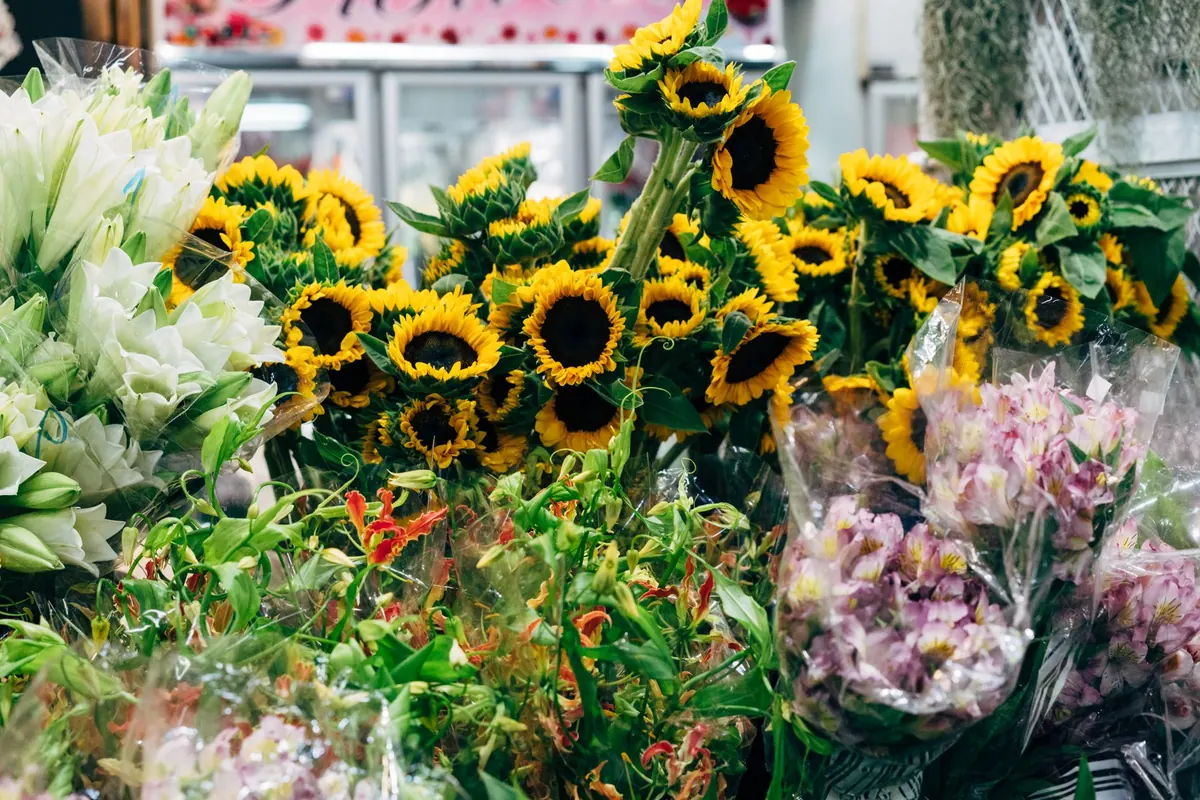
Outside, the venue is not just the building but the wind, the sun, and the ground underfoot. Choose stems that hold their shape in heat rather than varieties that wilt by the first toast. Dahlias, zinnias, sunflowers, eucalyptus, olive, rosemary, grasses, and small sturdy blooms earn their place. Sweet peas, delphiniums, and delicate ranunculus are lovely and fragile, better saved for a cool church or a shaded marquee.
Hydrangeas are the classic outdoor risk: gorgeous, and quick to collapse without a water source. Use them in arrangements that sit in water, or not at all on a hot afternoon.
Practical moves that make a difference:
- Plan for shade. Direct sun bleaches colour and softens stems within an hour.
- Keep centrepieces low and heavy on open lawns, and skip tall, loose arrangements that the wind will take apart.
- Choose fewer, sturdier pieces that can be moved indoors if the weather turns.
- Think about the ground. Gravel and uneven grass need wide, stable bases, not slim glass vases.
Formal and Historic Venues: Know When to Step Back
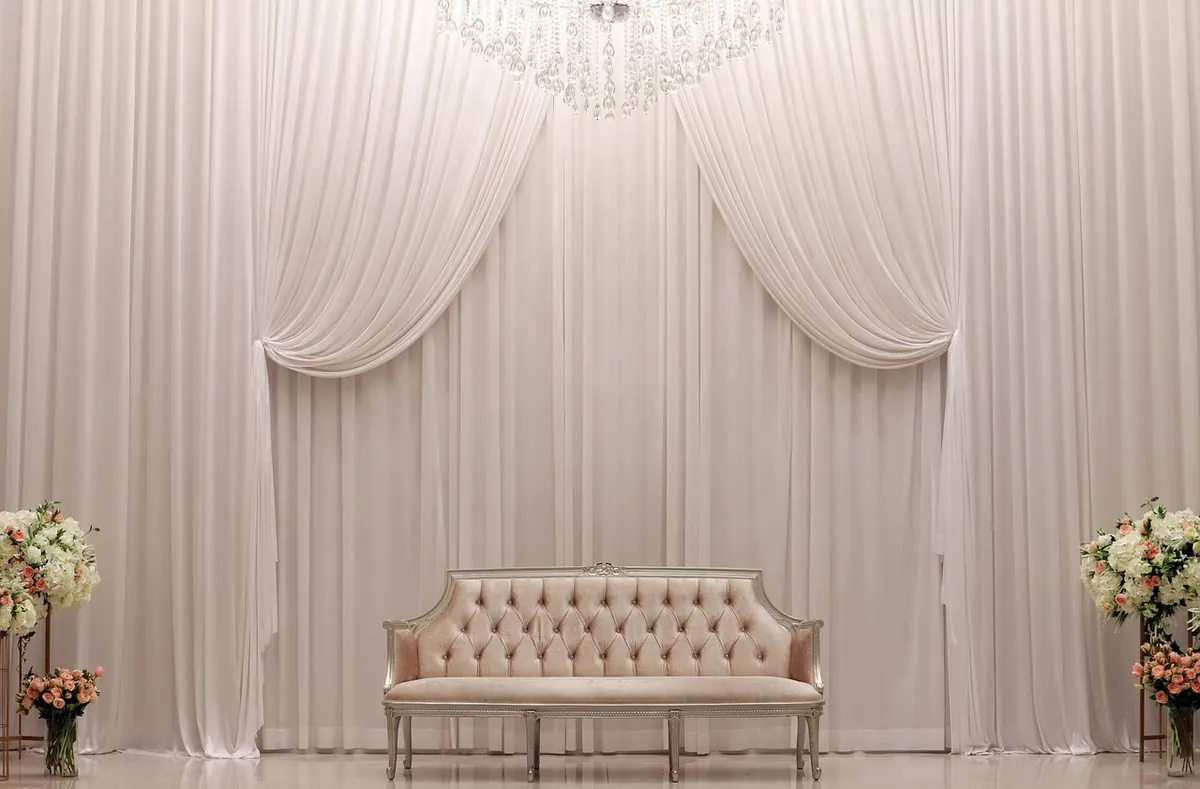
Ornate rooms, gilded ceilings, marble halls, frescoed walls, do not need competition. Restraint looks expensive here. One flower repeated in quantity usually beats a mixed medley: all-white roses down a long table, white lilac against panelling, green branches in a stone cloister.
Historic venues often have their own rules, including approved suppliers, no nails or tape on surfaces, and fixed delivery windows. Confirm these before you design anything, because they will shape what is possible. A hanging installation is a different project in a listed building than in a modern barn.
A Practical Walkthrough
Work in this order and most of the guesswork disappears.
- Visit at the right time of day and photograph the room without flowers in it.
- Write down the fixed colours, materials, and any decoration you cannot remove.
- Measure ceiling height, table dimensions, and aisle length, and note the table shapes.
- Ask about fixings, candles, access times, and what the venue already owns.
- Choose scale first, colour second, specific varieties third.
- Hold sample stems against the linen, the wall, and the floor before you commit.
When the flowers answer the building, guests rarely notice the flowers at all. They notice that the room feels finished. That is the goal, and it is a much easier one to reach than chasing a scheme that was never quite about the place you chose.
Photo: HeungSoon / Pixabay